
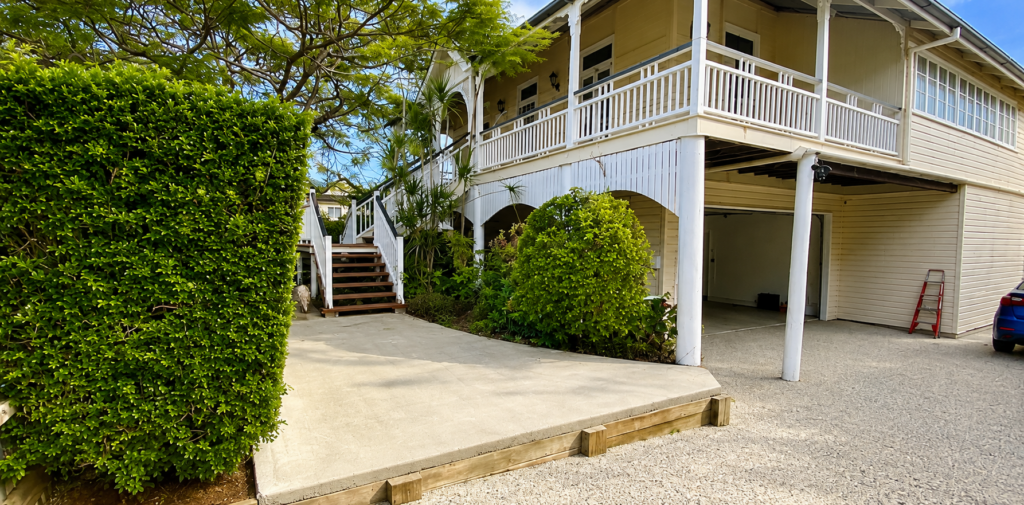
Queenslander house washing starts with checking the weatherboards, paint and openings before choosing a cleaning method. Sound painted surfaces may suit a gentle wash and controlled rinse, while peeling paint, damaged boards or suspect older materials need attention first. A high-pressure blast should never be the default for a character home.
Queenslanders have plenty worth looking after: deep verandahs, decorative timber, high-set walls and the details that make each home its own. Those features also mean a house wash needs a little more thought than simply working around four walls.
If you’re considering house washing in Mackay, these five checks will help you ask the right questions and set realistic expectations.
1. Identify the boards and their condition
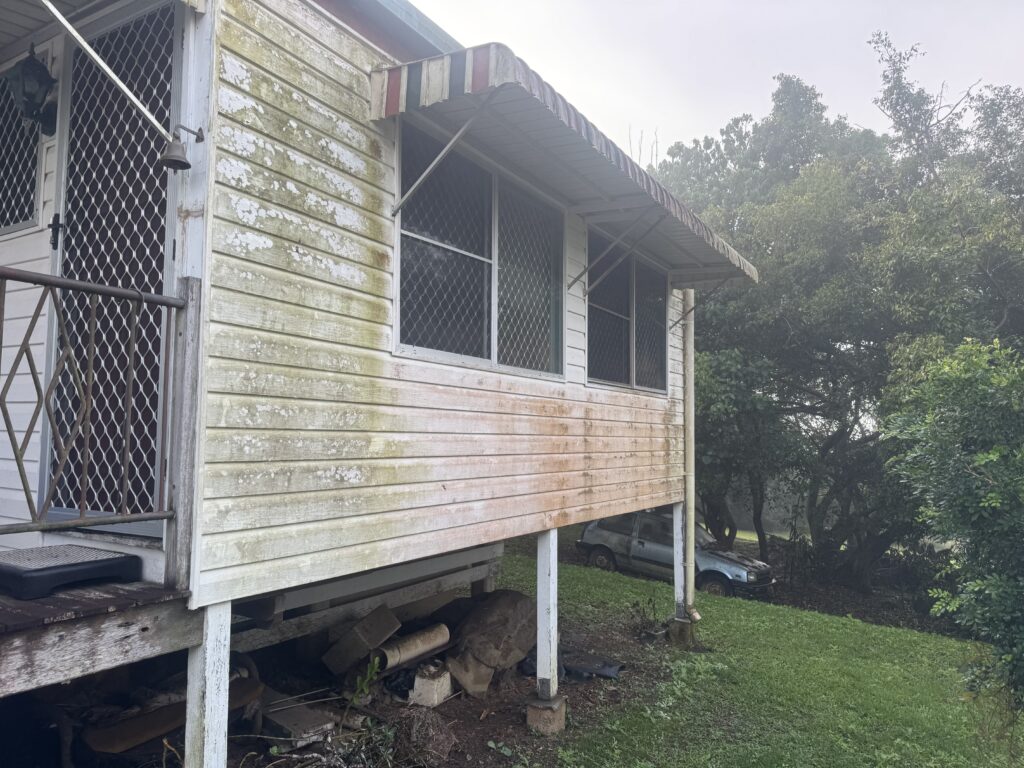
“Weatherboard” describes an appearance, but it does not tell you everything about the material. A home may have original timber, newer fibre-cement boards or a mixture added during renovations. Different sections can need different treatment.
Before arranging cleaning, note what you know about the cladding and any repairs. From a safe position at ground level, look for:
- Split, loose or visibly damaged boards
- Exposed timber where the coating has worn away
- Open joints around windows and doors
- Areas where water has entered previously
- A newer extension with a different finish
Share those details when requesting a quote. Washing cannot repair a damaged board or make a leaking window weatherproof. Point out vents and electrical fittings too; keep wash water away from electrical equipment and flag damaged seals before work starts.
For modern fibre-cement products, follow the relevant manufacturer’s care instructions. James Hardie’s Australian exterior-care guidance recommends non-abrasive cleaning products, a soft cloth and rinsing before the solution dries. That advice should not be assumed to cover unidentified older cladding.
2. Check whether the paint is ready to be washed
A dirty paint finish and a failing paint finish can look similar from the street. Closer inspection may reveal flaking, blistering or bare patches beneath the grime.
Those defects change the conversation. Ask whether cleaning can proceed around an affected area, whether repairs should come first, or whether the job needs to be coordinated with a painter. An older coating may not have enough adhesion to tolerate ordinary cleaning.
For intact exterior paint, Dulux’s care guidance describes detergent washing with a soft brush or cloth followed by a thorough clean-water rinse before drying. The right product and method still depend on the actual coating.
If repainting is already planned, explain that when booking. A maintenance wash and paint preparation have different goals. Our guide to washing a wall ready to paint covers that separate decision.
Pause for unidentified older materials
Older paint may contain lead. Suspect paint should be assessed before work that could disturb it; WorkSafe Queensland’s lead-paint guidance explains testing and appropriate controls.
Older cladding or eaves may also contain asbestos. Do not wash suspect material until it has been identified and suitable advice obtained. Queensland’s asbestos guidance prohibits high-pressure water cleaning of asbestos-containing materials. A “soft wash” label alone is not enough to establish suitability.
3. Ask how the wash will suit the home
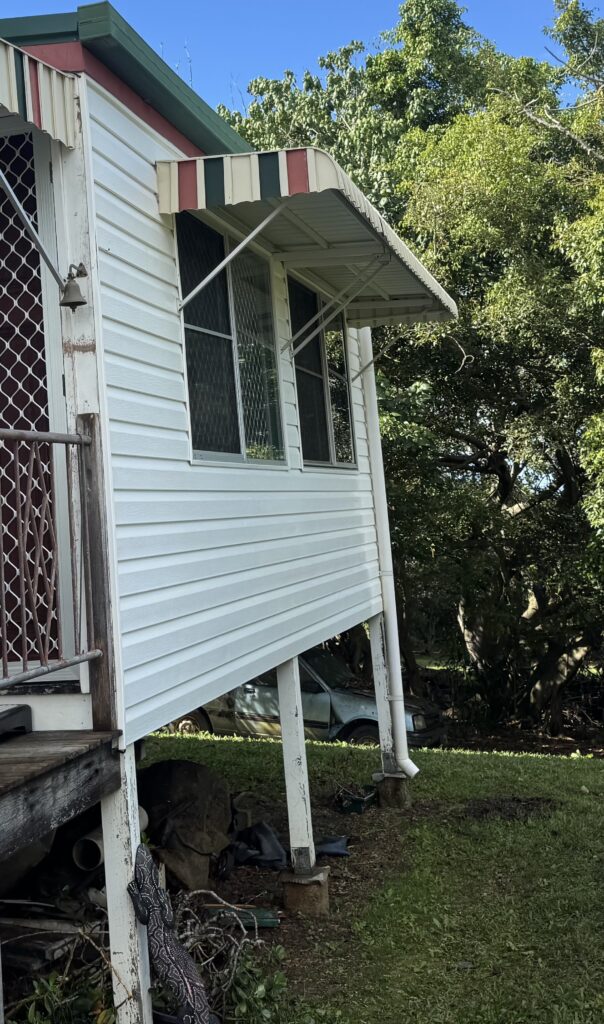
“Soft washing” generally means using cleaning solution and lower-pressure rinsing rather than relying on force alone. Pristine Washing’s published house-washing process includes a property assessment, soft-wash treatment and a rinse using pressure suited to the surface.
Our North Mackay house-washing project gives an example of local exterior-cleaning work. Your own home still needs its material and condition considered.
For a Queenslander, useful questions go beyond the equipment name:
- How will the paint and cladding condition affect the method?
- Which areas need a small test before wider cleaning?
- How will openings and vulnerable details be handled?
- What finish can reasonably be expected where coatings are weathered?
For historic building fabric, Queensland’s heritage maintenance guidance advises matching the method to the material’s condition and avoiding high-pressure spray. If your property has heritage controls or a conservation plan, flag that before work is agreed.
4. Include the awkward details in the quote
A high-set house can have walls, verandah ceilings, stairs, screens and decorative features at different heights. Be clear about which of these you want cleaned.
Photographs help explain access, but take them from a safe position. There is no need to climb a ladder to obtain a quote photo. Mention narrow side access, nearby landscaping and anything that limits access around the house.
Also ask what is included around windows, external gutter faces and under-house areas. A house-washing quote should make the agreed scope clear so there are no assumptions about the roof, gutter interiors or separate surfaces.
5. Plan around repairs and other bookings
Tell the cleaner about recent painting, known leaks and scheduled repair work. Fresh paint needs time to cure in line with its product instructions before washing is considered.
If pest treatment is also booked, speak with the pest technician about the order and timing. Our house washing before pest control guide explains what to clarify.
For ongoing care, use the home’s actual condition and coating requirements to guide your next wash. Our Mackay house-washing frequency guide offers more context without replacing product-specific advice.
Queenslander house washing FAQs
Can an old Queenslander be washed?
Often, but age alone does not answer the question. The material, coating condition, repairs and access determine whether cleaning is appropriate and how it should be approached.
Will washing make faded weatherboards look freshly painted?
Cleaning can remove surface dirt and improve presentation. It cannot replace missing paint, restore a failed coating or repair damaged timber.
Does a weatherboard house need the same method everywhere?
Not necessarily. Original walls, later extensions, trim and verandah details may have different materials or coatings. Identify those differences before agreeing on the method.
What should I send with a quote request?
Send your suburb, clear ground-level photos, the areas you want washed and details of any known paint, cladding or water-entry issues. Include the approximate age and last repaint date if known.
Give your Queenslander a considered clean
A good starting point is a clear picture of the home, its condition and what you want cleaned. Request a quote from Pristine Washing and mention that you have a Queenslander or weatherboard property, so the enquiry starts with the right details.