
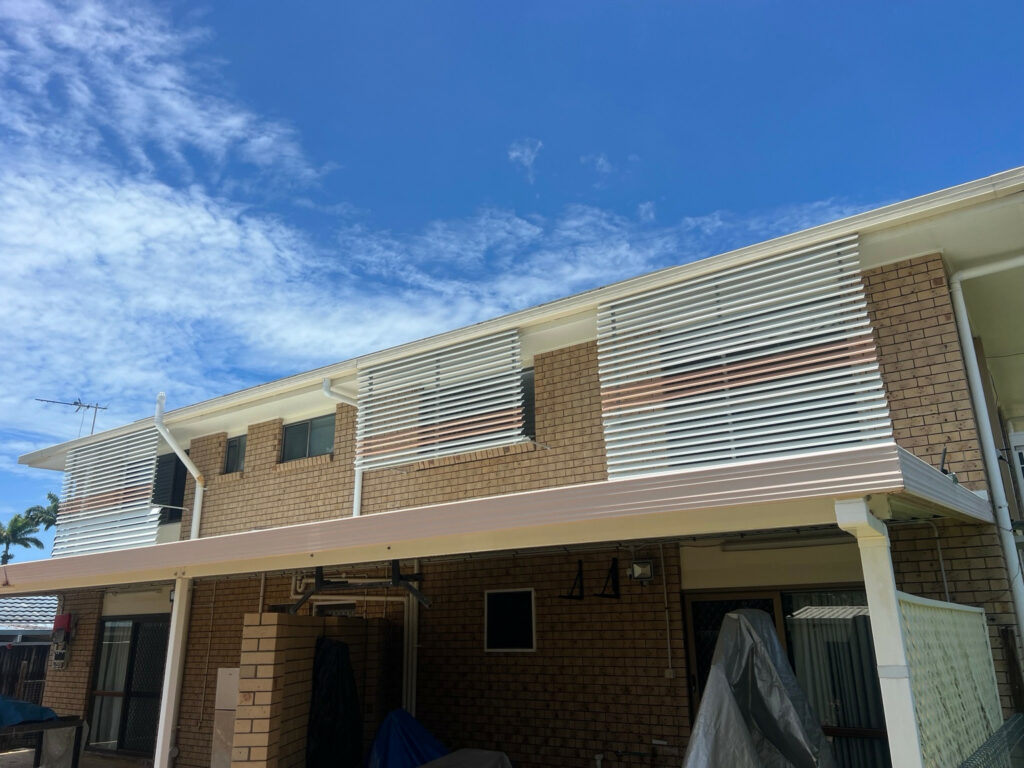
Dirty exterior blinds can make a Mackay home look tired, but staining alone does not mean the blinds need replacing. The useful question is whether you are looking at removable surface build-up, a worn coating or damaged components. Checking those separately helps you decide whether to book a clean or speak with a blind supplier first.
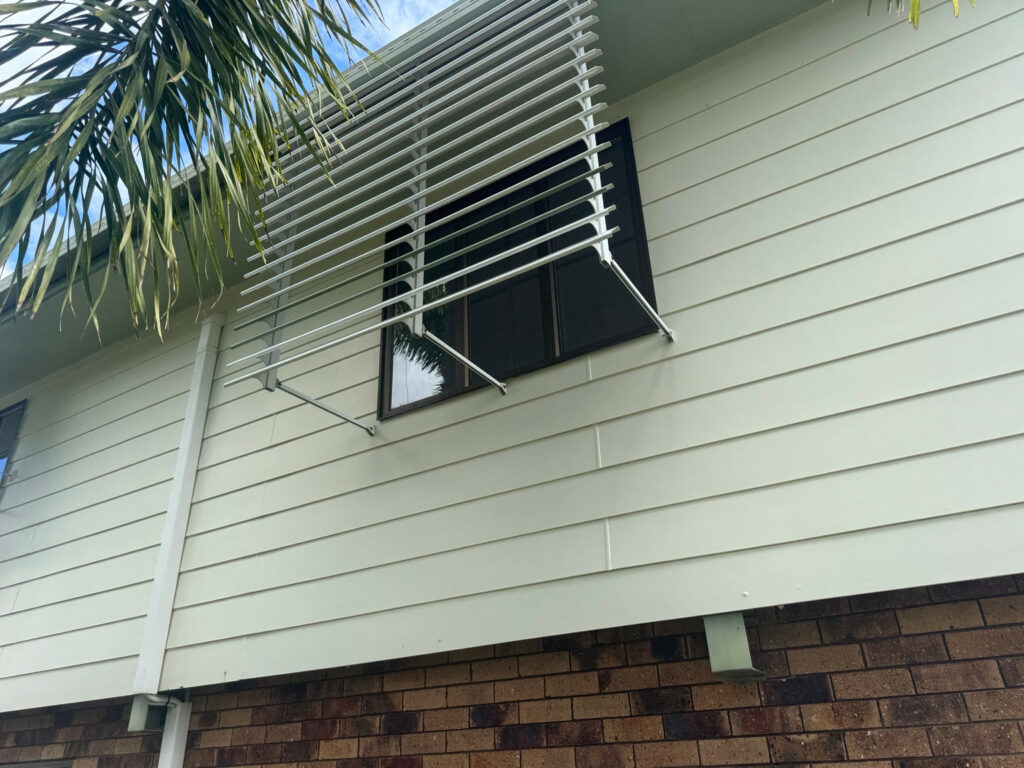
This guide covers rigid slatted exterior blinds, projecting window awnings and louvres like the examples shown here. Their material, finish and fixing arrangements still need checking. Our exterior blind cleaning service is the starting point for discussing the condition of yours.
1. Check what your dirty exterior blinds are made from
Find the original invoice, installer’s information or any product label. A pale painted surface does not tell you whether the underlying material is aluminium, steel or something else. Nor does it establish whether the finish is powder coating, paint or a later repaint.
If you do not know, say so when enquiring. Send a wide photograph showing the whole installation and close-ups of the slats, frame and affected areas. A cleaner or supplier may still need to inspect it in person before recommending a method.
Note whether the blinds are fixed or adjustable, whether both sides are accessible and whether they project over a path, garden or lower roof. Do not climb onto an awning or lean on its support arms to obtain a better photograph.
2. Separate surface marks from a failing finish
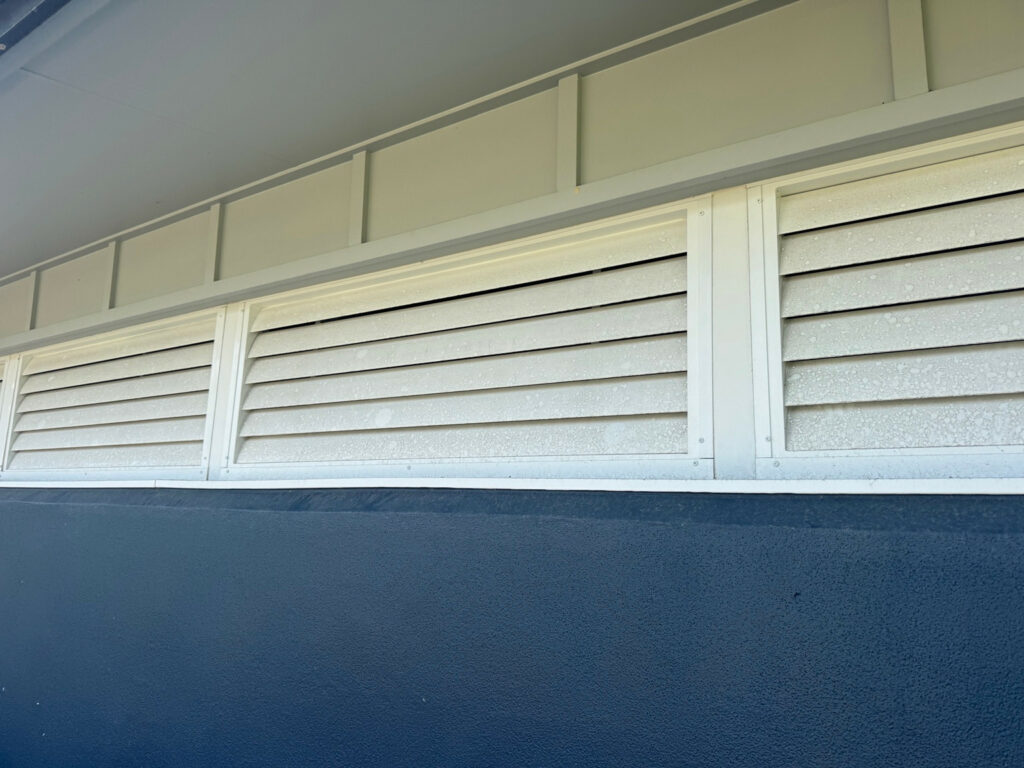
Dust, cobwebs and uneven grime can collect across slats and around their edges. Dark spots or greenish marks may justify a cleaning assessment, but appearance alone cannot confirm every stain’s cause. Explain when the marks appeared and whether they are spreading or returning in the same place.
A finish with peeling patches, blisters, exposed material or an uneven faded colour needs a different conversation. Cleaning may remove dirt while leaving coating wear more visible. It cannot replace missing paint, reverse corrosion or restore a damaged surface.
Look safely from the ground for bent slats, loose-looking fixings or changes in alignment. If the installation appears unstable, keep people clear and ask a suitable installer or repair professional to assess it before cleaning. Do not tighten, dismantle or straighten parts simply to prepare for a wash.
For dirty exterior blinds with an uncertain finish, ask for a small, discreet test area where appropriate. Agree to assess it once dry. A wet surface can look different from the final result, and the test should help set expectations before treating the whole installation.
3. Choose cleaning that suits the coating
The goal is to remove contamination without sacrificing the existing finish. Ask which products and equipment will be used, why they suit the identified surface and how adjacent windows, walls, plants and fittings will be protected.
For its powder-coated surfaces, Dulux Powder Coatings’ care guidance describes gently removing loose deposits, cleaning with soft non-abrasive tools and a mild detergent solution, then rinsing with clean water. It also notes that coastal or industrial exposure can require more frequent maintenance.
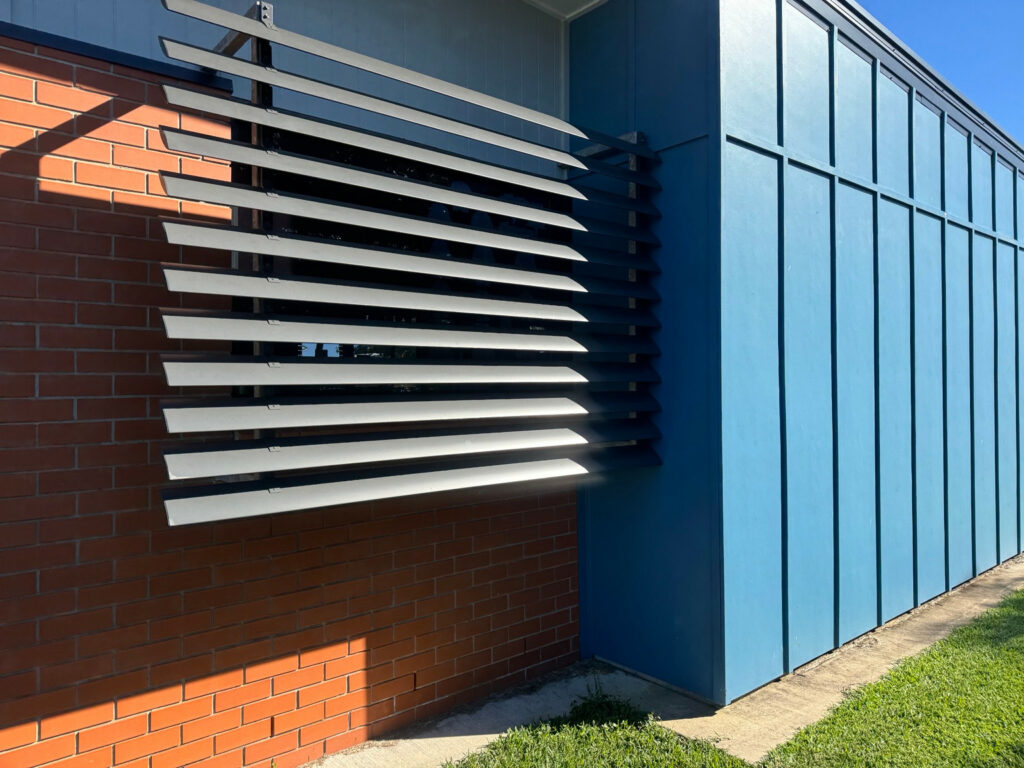
That is manufacturer guidance for a particular type of finish, not proof that the blinds pictured here have that coating. Follow the instructions for your actual installation. An older repaint, damaged coating or unknown material may need different advice before any cleaning begins.
Avoid treating rigid slats like a concrete driveway. Concentrated spray, hard scrubbing or an incompatible product can create problems rather than solve them. Do not mix cleaning chemicals or keep increasing the strength when a mark remains. Ask for an assessment of the mark and the finish instead.
Our Bakers Creek exterior blind-cleaning project is a separate local example of cleaning slatted blinds. Its outcome is useful context, but it is not a guarantee for another installation with a different coating or condition.
4. Decide whether repairs should come first
Cleaning is worth discussing when the blinds are sound and the main concern appears to be surface contamination. Repair advice comes first when slats are damaged, fittings are loose, the frame has moved or an adjustable mechanism is sticking. Do not force a stiff mechanism to gain access.
If the finish is deteriorating, ask a suitable coating specialist or installer whether repair or refinishing is practical. They can assess the underlying material and preparation required. A cleaning quote should not be treated as a quote for repainting or structural repairs.
Replacement may be appropriate when damaged components cannot reasonably be repaired or suitable parts are unavailable. Ask the supplier to explain the options for your particular system. Dirty exterior blinds do not have a universal replacement age, and a photograph cannot establish their remaining service life.
Compare the expected result of each option, not just the price. A clean may improve appearance while leaving faded paint visible. A repair may address one damaged part without renewing the whole finish. Make sure the proposed outcome matches what you want to achieve.
5. Get a clear scope before booking
For a useful quote, send your Mackay suburb, photographs and the number of blind or awning sections. Mention the height, access to both sides, any known damage and previous cleaning attempts. Include product information if you have it.
- Confirm which slats, frames and accessible surfaces are included.
- Ask how the finish will be checked and what marks may remain.
- Explain any difficult access or nearby items needing protection.
- Agree whether repairs or specialist advice are needed first.
- Check how the result will be reviewed once the surfaces are dry.
If you also want house washing, discuss it at the same time so the work can be scoped together. Windows, walls and blinds should still be assessed as separate surfaces rather than assumed to need identical treatment.
Keep dirty exterior blinds on your maintenance checklist
Keep dated photographs and the care instructions for the installation. Check for new staining and visible damage from a safe position, particularly after severe weather. Use the manufacturer’s maintenance schedule as the baseline rather than assuming every property needs the same interval.
Ready to find out whether cleaning is suitable? Request a free quote from Pristine Washing or call 0402 741 670. Send photographs of your dirty exterior blinds and tell us what you would like to improve, so we can discuss the cleaning scope and flag any concerns that need another trade.