
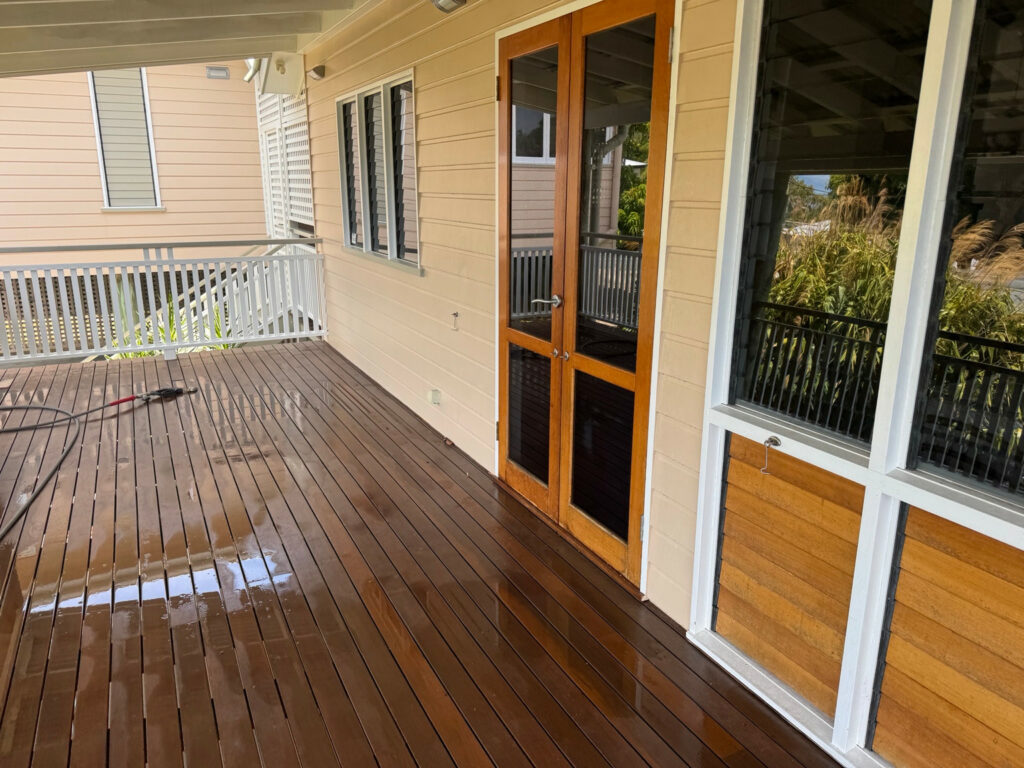
Timber deck cleaning before oiling starts with identifying the existing finish, dealing with damaged boards and removing surface contamination using the preparation required by your chosen coating. Then check that the timber meets that product’s drying and moisture requirements. A clean-looking deck is only one checkpoint: old coatings, rough fibres or unsuitable conditions can still hold up the oiling.
For a Mackay homeowner planning the job around work, weather and weekend use, the best starting point is the coating you intend to apply. Work backwards from its instructions before booking the clean.
1. Identify the boards and the finish
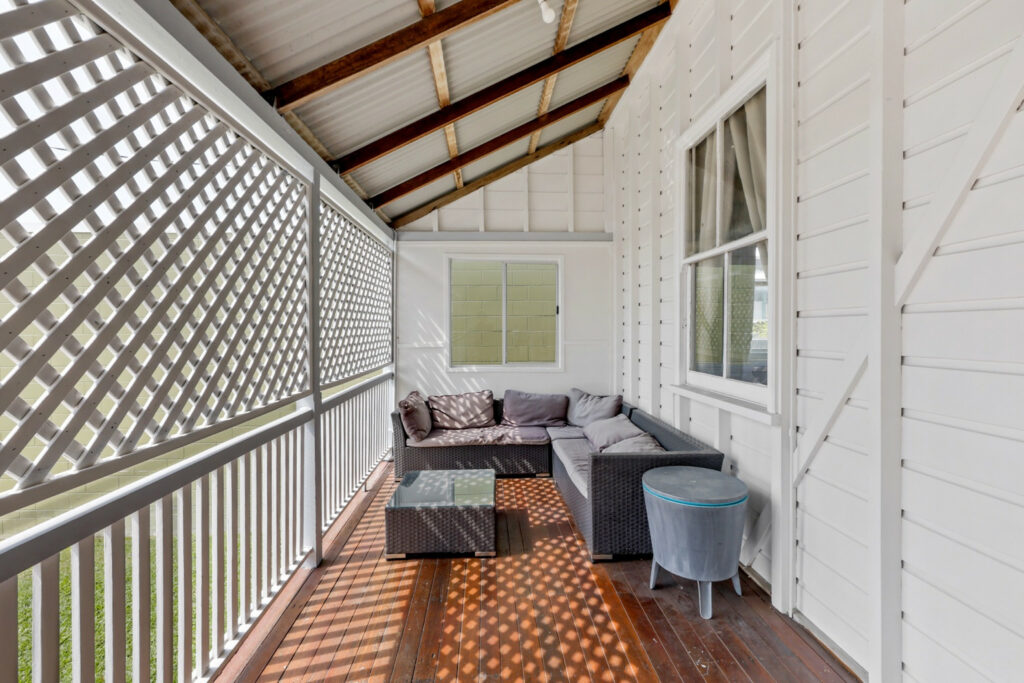
Confirm that the deck is timber. If it is composite, use the board manufacturer’s care instructions rather than applying a timber-oiling process.
For timber, find the name of the previous oil, stain or paint if possible. A leftover tin, receipt or record from the last contractor can help. Photograph the label and note whether you want to use the same product again.
If the finish is unknown, ask the coating manufacturer or a timber-finishing professional what preparation is needed. Guessing from colour alone leaves an important part of the plan unresolved.
2. Decide whether repairs come first
Before moving furniture or washing, look for loose boards, raised fixings, splits, soft sections and damaged steps or handrails. Keep people off areas that appear unsafe and arrange an appropriate tradesperson’s assessment.
Cleaning will not fix deteriorated timber or make a loose handrail secure. It may also reveal problems that were partly hidden by grime, so leave room in the schedule for further work.
Our timber cleaning service explains how visible condition and existing finishes affect the cleaning scope. Repairs and coating work should be confirmed separately.
3. Work out whether cleaning is enough
A maintenance recoat and a change of finish can need different preparation.
For example, Intergrain’s UltraDeck Timber Oil instructions distinguish between an existing UltraDeck coating in good condition, new timber, weathered timber and failing coatings. A sound maintenance coating may need cleaning, while severely weathered boards can need sanding. Paint, varnish or unevenly deteriorated coatings may require removal back to bare timber before cleaning.
Use those categories to frame the questions for your own product:
- Is the existing coating suitable to recoat?
- Does anything need stripping or sanding first?
- Is separate mould treatment required?
- What preparation is specified for replacement boards?
Get the sequence agreed before work starts. New boards and older coated boards may need different treatment on the same deck.
4. Prepare the area and use a suitable cleaner
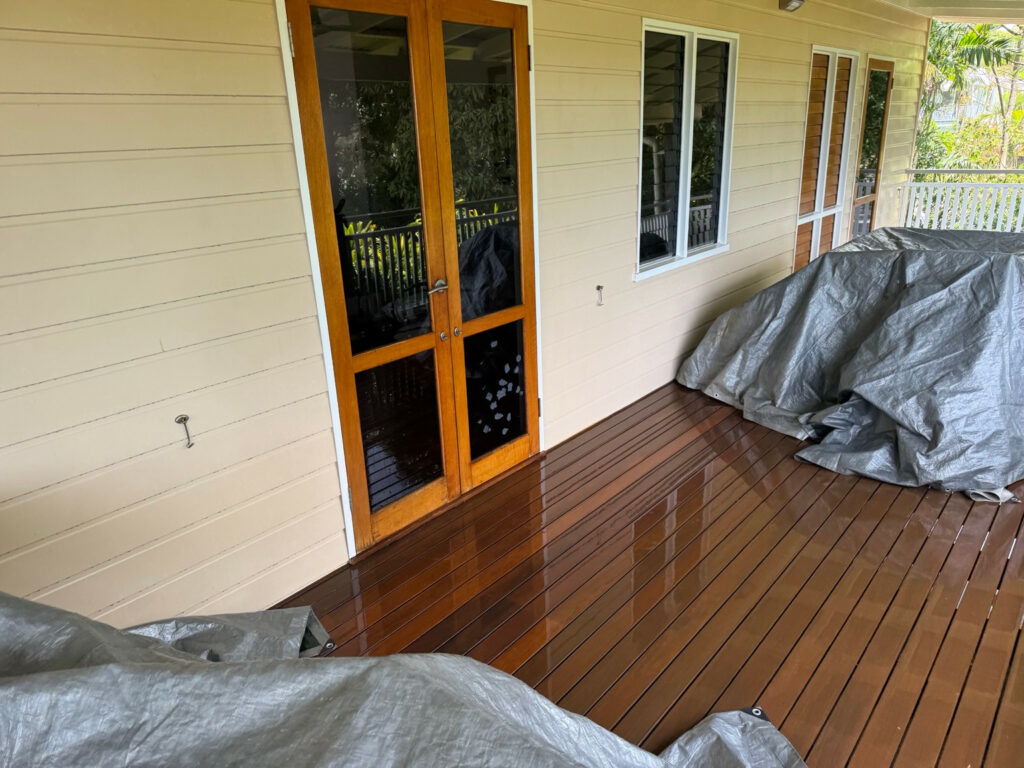
Clear furniture, mats and pots so the whole surface can be inspected and accessed. Discuss nearby plants, painted surfaces, metalwork and where rinse water will go.
Follow the selected cleaner’s label for protective equipment, compatibility, application and rinsing. Cabot’s Deck Clean guidance, for example, calls for testing a small area, protecting surrounding surfaces and keeping the cleaner from drying out during use. It also explains that the product is not a paint remover, although some weathered coatings may lift.
If the ceiling above the deck also needs attention, plan that work before the final deck preparation. Our patio ceiling cleaning guide covers the separate checks involved with overhead surfaces.
5. Check the method before reaching for more pressure
Increasing pressure to chase a stubborn mark can create another preparation problem. CUTEK’s technical guidance warns that power rinsing can damage wood fibres and leave a furry surface, and advises against turbojets on timber.
The method should suit the timber, its condition and the cleaning product. A universal pressure setting cannot account for all three. If fibres lift or the surface starts marking, stop and reassess rather than continuing across the deck.
Our DIY versus professional pressure cleaning guide can help when deciding who should handle the washing stage.
6. Confirm the deck is ready for the coating
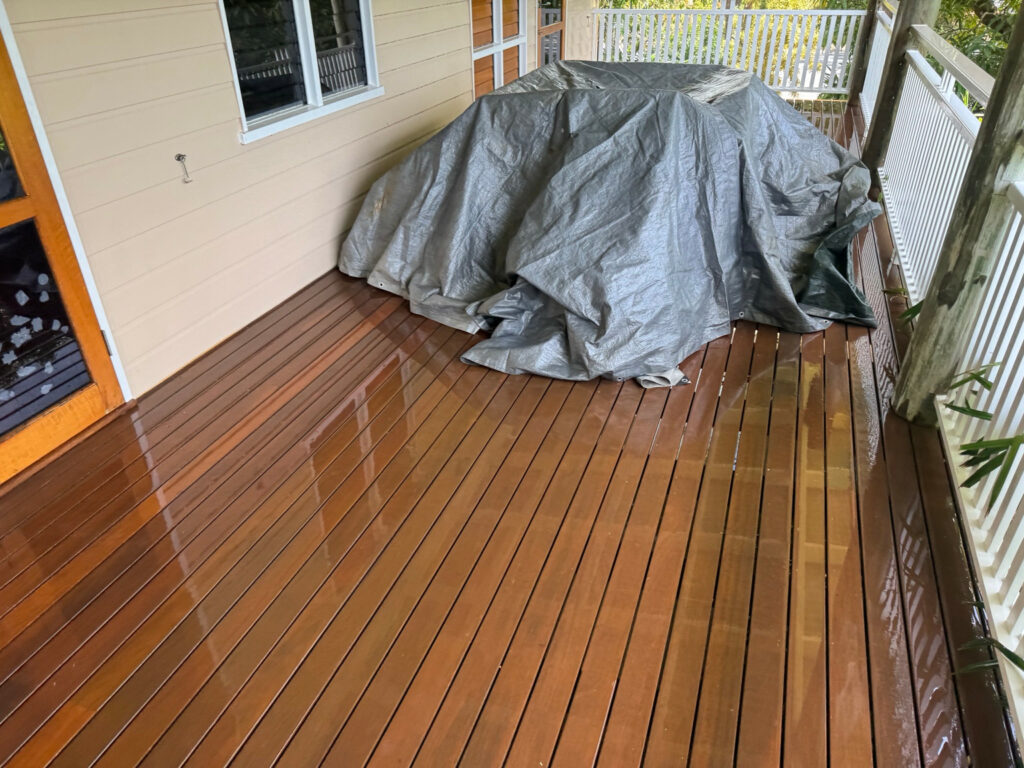
Avoid promising yourself that washing on Saturday automatically means oiling on Sunday. Check the current product instructions, the deck’s condition and the weather window.
Cabot’s Natural Decking Oil guidance calls for thorough drying and warns against application when rain or heavy dew is expected during drying. Other products have their own preparation requirements. Use the instructions for the exact coating you bought.
Before the applicator starts, confirm:
- Required repairs and coating removal are complete
- The surface has been rinsed and is free of loose debris
- Any rough fibres or remaining marks have been assessed
- The timber meets the product’s moisture and surface requirements
- Application, recoating and return-to-use conditions can be met
Where a moisture measurement is specified, arrange the appropriate check. Surface appearance alone should not replace it.
Timber deck cleaning before oiling: FAQs
Can I oil a deck immediately after cleaning?
Only if the chosen coating’s preparation and drying requirements are met. Check the label and technical data rather than using a general waiting time.
Does every timber deck need sanding?
No. The existing finish, weathering and intended coating determine whether sanding is needed. Ask for this to be assessed separately from the cleaning quote.
Will cleaning make every board the same colour?
No. Timber age, exposure and remaining marks can affect the result. Our West Mackay timber fence project shows a local timber clean, but it is a fence example and does not predict a deck’s final colour.
Does booking deck cleaning include oiling?
Confirm the scope before booking. Cleaning, repairs, sanding and applying a new finish are separate tasks; do not assume they are all included.
Planning timber deck cleaning in Mackay?
Request a quote from Pristine Washing and mention that you intend to oil the deck afterwards. Include your suburb, approximate deck size, wide and close-up photos, and the names of the existing and proposed coatings if known. That gives us a useful starting point for discussing the cleaning stage and any preparation questions to resolve beforehand.